This section discusses general information vital to a visitor’s inquiries. Accompanying details, questions, and other important guides about the Church’s gatherings and venues are specifically arranged for convenience.
Please refer to the links below for the detailed discussion of visitors’ most frequently asked questions about our gatherings, congregational houses, and more.
Gatherings
The Church conducts gatherings of diverse forms, from worship to worthwhile socio-spiritual assemblies.
Q. What is ‘Pasalamat’ or Thanksgiving? What is it all about?
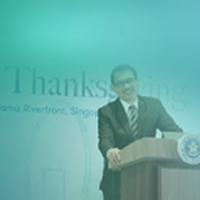
A. A ‘Pasalamat’ or Thanksgiving is a way of offering gratitude to the Almighty for His goodness. Those who offer thanksgiving range from individuals to groups, with varying degrees of reasons and motives for rendering it. Presenters offer songs of praise and worship which tell of God’s kindness (Psalms 92:1-2). In the Church, the sacrifice of thanksgiving is systematized and disciplined so as to ensure that every individual is physically and most importantly, spiritually prepared and well-motivated to render thanksgiving. The process includes the registration or enlisting of oneself for thanksgiving through the Thanksgiving Orientation Committee, a small group charged to organize the thanksgiving presentations; and an orientation, a briefing and consultative process done to prepare the participant for thanksgiving.
Q. Why do you conduct Thanksgiving so often?
A. It is a commandment in the Bible to give thanks to God as often as possible. It is written in Colossians 3:15 and Acts 2:46-47.
Q. What activities are included in a Thanksgiving celebration?
A. A thanksgiving rite begins with congregational singing, shortly followed by a prayer. After some introductory remarks, the brethren who are scheduled to offer thanksgiving gather on the stage and present their song numbers. Production numbers like role-plays and theatrical dances are also presented.
A sermon is delivered, usually split in half-time. The first part is discussed after the opening prayer, and the second half after the midday break. In the case of the quarterly International Thanksgiving, a long topic is split in several time parts, and evenly discussed throughout the day with breaks in between. The sermon is the highlight of the Thanksgiving ceremony wherein the Presiding Ministers take charge of teaching the congregation new things about the Scriptures.
Q. Can a non-member offer Thanksgiving?
A. Non-members who became part of a Church endeavor may join members in the Thanksgiving.
Q. How often do members meet?
A. The brethren meet thrice a week on the average. Religious services attended by the brethren include the worship service, prayer meeting, and Thanksgiving ceremony. There are occasions in which brethren do not only convene on the usual three-day weekly assembly. They also meet on days that call for particular purposes.
Q. What happens during an assembly?
A. Religious gatherings, even social conventions, include congregational singing, prayers, Bible reading (for worship services and prayer meetings) deliberation, closing prayer, doxology, blessing, and minor group meetings. These are reflected in I Corinthians 14:26. Also, before the actual preaching or deliberation, circulars are read by a worker or minister. Circulars contain information coming from the Church’s central office and are delivered to the congregation for information dissemination purposes. This is based on Philippians 4:8-9.
Q. Why do members kneel in prayer? Am I obliged to do the same?
A. When members pray, they kneel in observance and compliance to the Biblical ordinance in Psalms 95:6. Non-members may or may not join in the kneeling, or even in prayer. They are never forced to pray, or if they voluntarily join the congregation, they are never coerced to kneel.
Q. Why do members enclose the area while praying? What does it mean?
A. It is the standard practice of the Church not to publicize what it is supposed to do in secret. The Bible clearly declares the things which should be done in private and the things which should be done openly. These are recorded in Matthew 6: 1-18.
Congregational House
The worship houses of the Church follow the same established plan, not necessarily the architectural layout or engineering design. The most significant elements of the congregational house are found in all locales or coordinating centers worldwide.
Q. How can I tell if I am going to your congregational house?
A. It is quick and easy to identify locales and coordinating centers (congregational houses) in the Philippines since all of them have large, identical banners and streamers labeled ‘Ang Dating Daan (The Old Path)’, followed by the name of the locale, named after the locality where it is situated. The official seal or logo of the Church is also shown in the banner.
Q. How does the typical inside of a congregational house look like?
A. Inside a locale, there are no graven images, idols, or objects of pagan worship found. This is in accordance to God’s declaration in the Old Testament, found in Exodus 20: 3- 5, and in the New Testament, in I John 5:21.
The pulpit area has a lectern used by an assigned worker or minister. In most centers, television platforms are also set in the pulpit. Compact disc (CD) copies of topics are viewed and studied during sermon.
Q. How about the children? Is there a place for them?
A. Yes, they have. Most locales have KNC (Kawan ng Cordero) or Lamb’s Fold rooms, solely for children’s use. This room is equipped like a classroom, with a trained worker to handle and teach children. A good thing about this provision is that there is a venue where children can be taught Bible lessons at a young age, reflecting Proverbs 22:6. There are topics intended only for children. Play tools and educational materials are also provided to give the young additional opportunities to learn and enjoy themselves, even inside the worship house.
Q. How will I be treated as a visitor?
A. A visitor need not worry when he enters a worship house. First, he will be gladly accommodated by guest coordinators or ushers. Visitors are usually given front row seats so they can view and hear the sermon clearly. If non-members ask for a copy of the Bible, it shall be given to them free of charge (Matthew 10:8). In cases when visitors inquire about Bible studies, Bible literature and other religious services, workers and ministers personally take charge. They may even be given advice if they need it (I Peter 3:15). Requests of this sort are attended to. Bible enthusiasts can also request for free Bible studies in the comfort of their homes.
Baptism Ceremony
The word baptize was derived from the Greek word baptizo, which means “immersing.” Baptize, in Strong’s Hebrew and Greek Dictionaries, means “to make whelmed (that is fully wet); used only (in the New Testament) of ceremonial ablution, especially (technically) of the ordinance of Christian baptism: - baptist, baptize, wash.”
Baptism is part of the MCGI doctrinal topics. It is an important doctrine of the Lord Jesus Christ in the Bible. More detailed meaning of baptism will be discussed in the indoctrination session.
Following are questions frequently asked in preparation for baptism:
Q. What is a baptism ceremony?
A. It is a formal procedure by which one is admitted as an official member of MCGI. It is administered by a baptizer. (Mat. 28:19; Acts 8:26-40)
Q. Who can be a candidate for baptism?
A. A person who has completed the indoctrination sessions and has fully understood the whole doctrines, in his own free will may receive the baptism.
Q. Where is the baptism ceremony being performed?
A. In the Philippines, mass baptism is done inside the Ang Dating Daan Convention Center compound in Apalit, Pampanga, where there are dedicated baptism areas. In the provinces of the country and also abroad, baptism ceremonies are conducted in suitable places or in MCGI coordinating centers or locales.
Q. Who is my contact in the baptism place?
A. The assigned worker in the locale where you were indoctrinated will accompany you to the baptism place. The transportation, food and drinks will be provided by the Church. Detailed information about the activity will be advised in the last day of indoctrination session.
Q. What will I expect in the baptism ceremony?
A. The activity proper will start with a registration for the candidates for baptism and also the brethren accompanying them for attendance monitoring purposes. The ceremony begins with congregational singing, followed by an opening prayer by the assigned minister. Opening remarks and listening to a brief discussion on the doctrine of baptism will follow, and then the baptism rite. There will also be a gathering after the baptism to practice a song of thanksgiving to God. Food and drinks will also be served.